
Trusted by the best
Self enterprise

Pre-KYC
Screen out ineligible users before they become billable.



SELF MOBILE
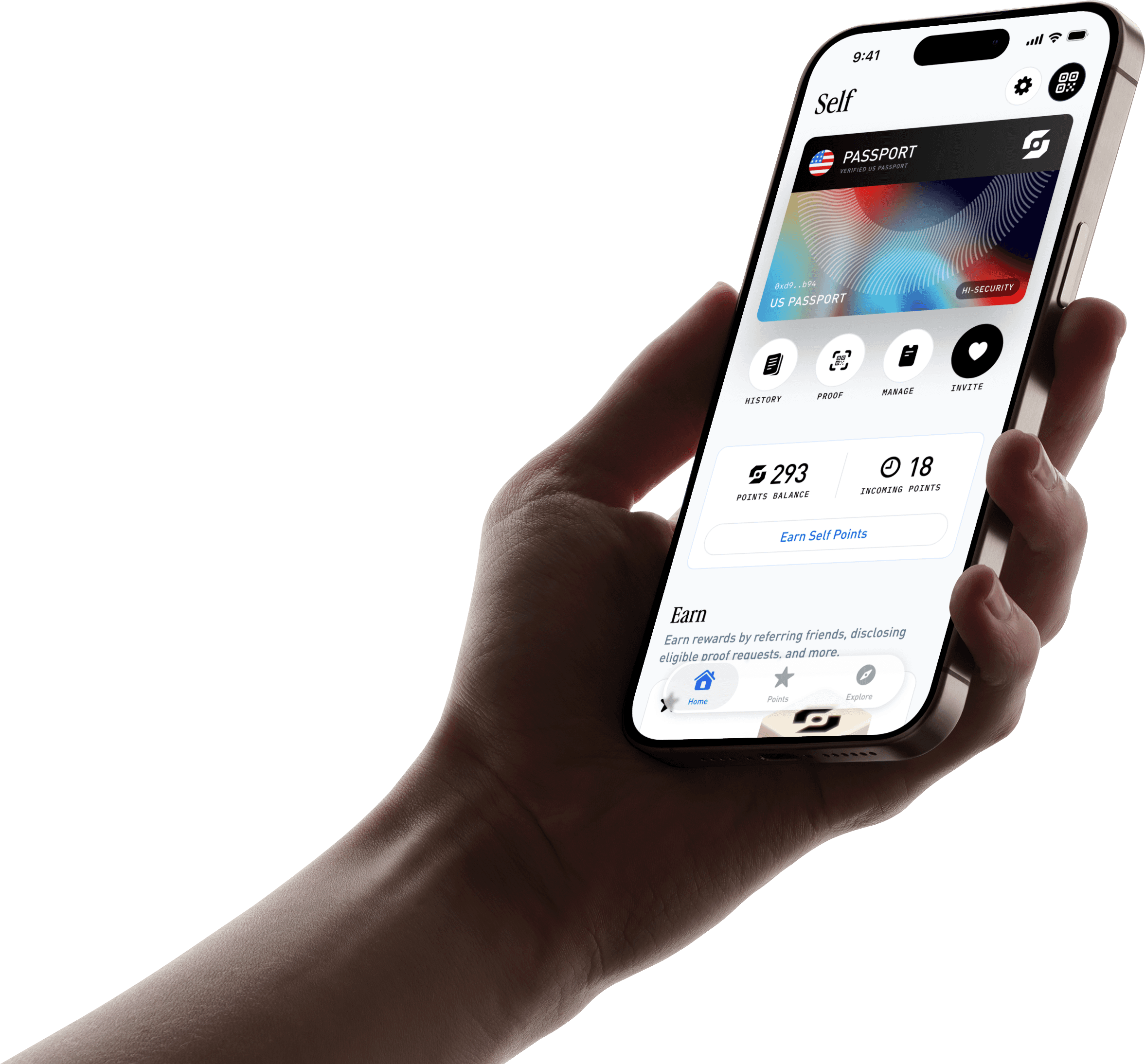
Use Self Enterprise or integrate at the infrastructure level with the Self SDK. Configure once, start generating requests for verifications instantly.
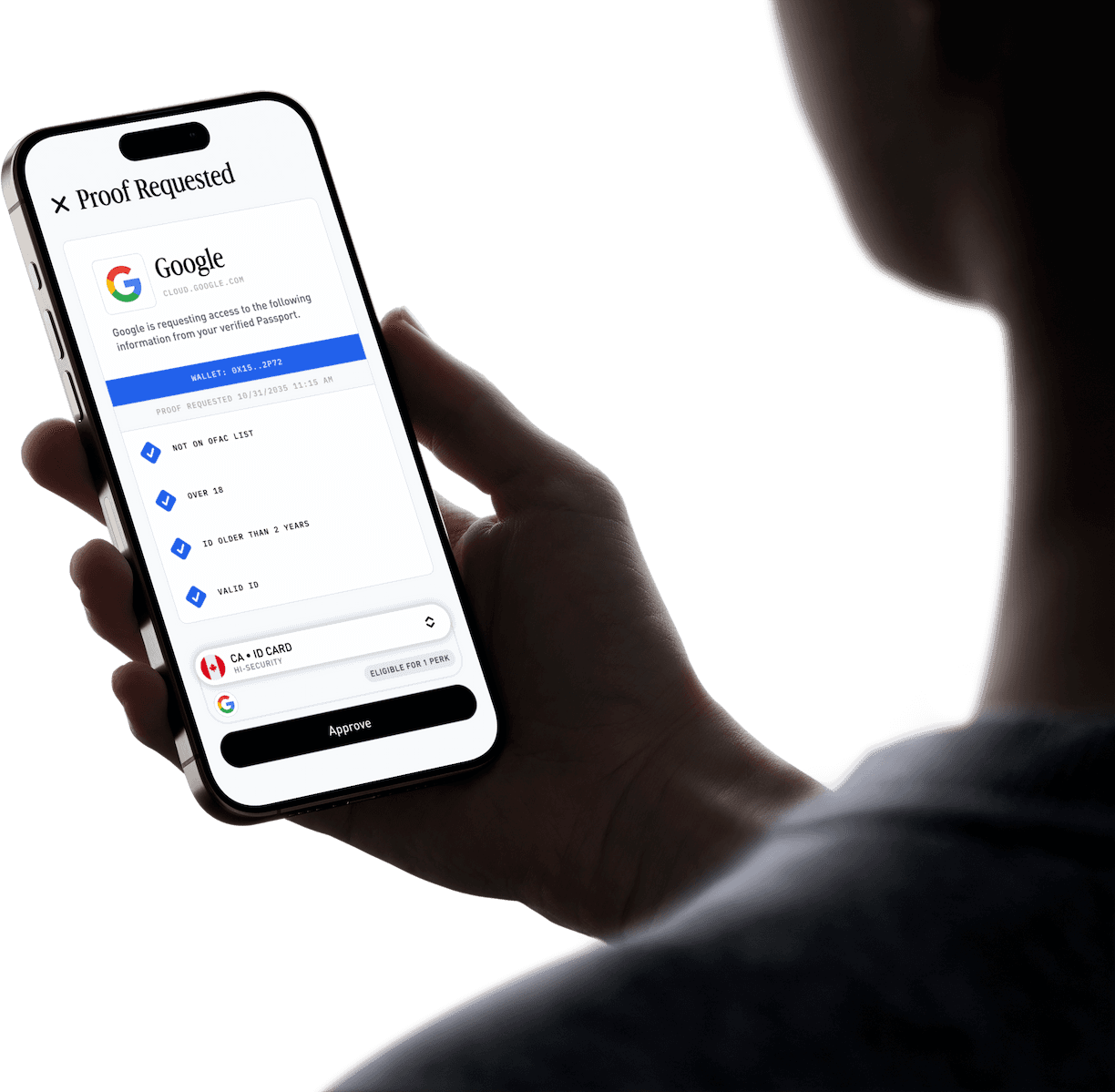
Request user to prove anything from age verification to specific details like gender, exact age, country of origin. Users only share what's necessary, no data is stored.

The Self Design Partner Program
Almost every enterprise in the world is in the middle of an AI transformation right now - the most consequential shift in business in a generation. And identity sits at the center of it: every agent, every workflow, every AI-powered decision needs to know who's acting, who's accountable, and when a human needs to step in.
We launched the Self Design Partner Program because our customers asked for it. It's a hands-on partnership for enterprises building and orchestrating identity into their AI use cases - optimized for latency, privacy, and human-in-the-loop control.
– Self Core team
If you're shaping how your company uses AI and want a trusted partner alongside you, we'd love to talk.


What is Self?
Self is a privacy-first, open-source identity platform built on zero-knowledge proofs. People verify once by scanning the secure chip in their biometric passport or national ID (Aadhaar is also supported) using the Self mobile app. From then on, they can prove specific facts about themselves: that they're a real, unique human, over a certain age, of a given nationality, or not on a sanctions list, without ever handing over the underlying document or personal data.
One human, one credential, usable everywhere. Apps, protocols, enterprises, and AI agents can all verify those facts with a single integration.
Is Self a KYC provider, and how is it different from traditional verification?
Self is closer to “zk” KYC than to conventional KYC. Traditional providers ask users to upload documents and selfies, then store and review that data. Self pairs a government-issued biometric ID with zero-knowledge cryptography, so the proof is generated on the user's own device and only a yes or no answer (plus a uniqueness signal) ever leaves the phone. There are no document uploads, no manual review queues, and no central database to breach. For regulated steps that still require full KYC, Self complements the process rather than replacing the parts you are legally required to keep (see Pre-KYC below).
What does Self offer enterprises, and what does it cost?
Self is identity infrastructure for companies that need real identity signals without the cost, friction, and liability of holding personal data. There are currently three tiers: Free, Starter (at $99/month) and Enterprise (contact sales).
What does Self have to do with agentic commerce and x402?
Agentic commerce, where agents pay for and access services on their own, needs two layers working together: a payment rail and a trust layer. x402 is the open payment standard (built on the long-dormant HTTP 402 "Payment Required" status code) that lets an agent pay inline for a resource, usually in stablecoins. But payment alone does not tell the receiving service who authorized it. Self Agent ID fills that gap by proving the agent represents a real, unique, compliant human in the same request that carries the payment. Without an identity layer you get untraceable spend, services gamed by bots, and no way to enforce compliance. With both, every transaction is settled and attributable, so pay-per-use pricing becomes abuse-resistant and gated services can verify the operator, all without exposing the human's identity.
What can I build with Self?
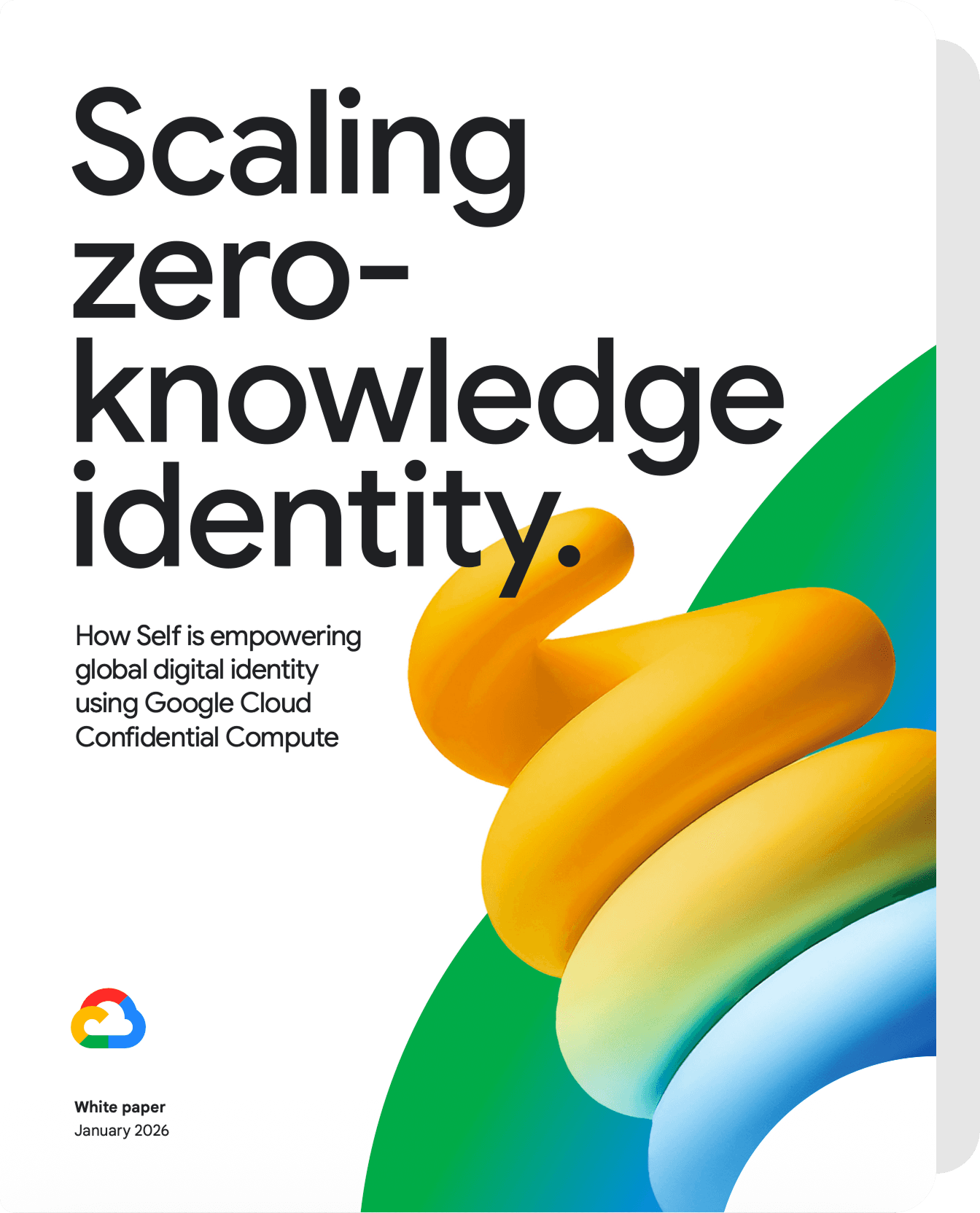
Common use cases include proof-of-human gating to keep bots and sybils out of signups, social apps, reviews, and communities; age and country verification without collecting a date of birth; sanctions and OFAC screening before any billable event; compliant onboarding through Pre-KYC; fair distribution for airdrops, faucets, rewards, stablecoins, and UBC-style allocations where one human must equal one claim; DeFi features and yield reserved for verified humans or restricted by nationality where required; agentic identity and commerce that give every agent a human-backed, sybil-resistant identity; and onchain reputation or naming tied to verified, unique people. Self already powers proof-of-human in major partner products, including a Google-linked program distributing a regulated US-dollar stablecoin only to verified, eligible humans.
Has Self been audited, and does it work with other identity systems?
Yes. Self Protocol completed a third-party security audit conducted by zkSecurity, and the full report is publicly available. Self is also built around open, privacy-preserving standards, including emerging agent-identity standards like ERC-8004, so credentials can be verified across platforms and integrated with other identity frameworks that support the same open approach.
Why has proof of human suddenly become urgent?
The internet was never built to answer one basic question: is there a real, unique person on the other end? AI made that question hard to dodge. Bots, sybil farms, and autonomous agents can now imitate people at scale, sign up, transact, and click through flows faster than any human. At the same time, the old workaround of collecting and storing everyone's ID documents has become a liability that gets breached and erodes trust. Self gives you a trustworthy answer about whether someone is a verified human (or an agent that represents one) without anyone having to see, store, or risk that person's private data.
What is Pre-KYC, and how does it save enterprises money?
Pre-KYC is Self's enterprise product for cutting waste out of compliance onboarding. A large share of KYC spend goes toward screening applicants who were never eligible in the first place, whether by age, restricted country, or sanctions status, and a majority of users abandon document-heavy onboarding before finishing. Pre-KYC adds a cryptographic pre-screening layer above the billable KYC step. Using a zero-knowledge proof generated on the user's phone, it checks categorical eligibility (age threshold, nationality, sanctions status, document validity) before any paid check is triggered. If the proof passes, the user proceeds to full KYC. If it fails, they are stopped at the gate. No PII changes hands for the people who do not qualify, so your servers never touch their data and your liability for rejected applicants effectively disappears. It also works as an eligibility pre-screen for waitlists and new-market launches.
What is Self Agent ID?
Self Agent ID is a verifiable identity layer for AI agents. A user scans their passport in the Self app, a zero-knowledge proof is generated on-device, and that proof links the user's real identity to their agent without exposing who they are. The agent receives a soulbound on-chain NFT and an interoperable identity card that any service can check with a single API call. Sybil resistance is built in, because each passport produces a unique nullifier, so one verified human maps to one agent. It is built as an extension of ERC-8004, the emerging standard for agent registries, with SDKs in TypeScript, Python, and Rust, plus an MCP server and a Claude Code plugin so developers can manage agent identity from their IDE. A live example is the Celo Agent Visa, the first structured "work visa" program for AI agents, which requires Self Agent ID verification as its entry point.
What is Universal Basic Compute (UBC), and how does Self relate to it?
UBC is an emerging idea that as AI does more of the producing, each person could receive a recurring allocation of AI compute, the way some propose universal basic income but denominated in computation rather than cash. Any per-person distribution like this only works if you can guarantee one human, one allocation. Without sybil resistance, a single actor spins up thousands of fake identities and drains the pool. That guarantee is exactly what Self provides. The same mechanism already powers real distributions today, including proof-of-human stablecoin and testnet faucet programs where resources must reach unique, eligible people rather than bot farms. UBC is the larger version of that same pattern, and proof-of-human is its foundation.
Where is my data stored, and who can access it?
On your device, never on Self's servers. When you verify, a verifiable credential is created and stored locally in the app. There is no cloud copy and no central database, so there is nothing for an attacker to breach and nothing for Self to leak. Because of the zero-knowledge design, Self itself never sees raw documents. Only you can access your information, and nobody, including Self, can use it unless you choose to disclose it. When you share a proof such as "over 18" or "not on a sanctions list," you share only that single fact, never your full identity or documents, and disclosure always requires your consent.
How do I get started?
Start with Self Enterprise today for free. Also, users can download the Self app (iOS or Android), scan the secure NFC chip in a biometric passport or national ID, or connect an Indian Aadhaar, and get verified in the app. For agent use cases, the Self Agent ID SDKs (TypeScript, Python, Rust), MCP server, and Claude Code plugin let you manage agent identity from your IDE.