
•
Published
When Self launched almost one year ago, the proliferation of AI agents was a prediction that had not yet fully come to life. Recent developments like Claude Code and OpenClaw have made autonomous agents more powerful and accessible to everyday users, helping fuel AI’s rapid expansion across the internet. While the idea that AI agents would work, post, and even transact on behalf of real humans might have seemed distant last year, the future is here.
These developments present new challenges: rather than a clean 1:1 relationship between person and agent, how can anyone ensure agents aren't spinning up countless additional agents? How can agentic apps like Rent-a-Human ensure that the "humans" they're hiring for microtasks are actually real people? With agentic social platforms like Moltbook, and even platforms originally built for humans like X, how can users tell if they're interacting with a human or an autonomous agent?
Self’s privacy-preserving proof-of-human and identity verification solutions were built for this new digital landscape, and the tooling is reaching clear product-market-fit today. This is why today, during his Open Source AI Summit SF presentation, co-founder and CEO Rene Reinsberg unveiled Self’s agent resource landscape, an in-depth look at the tooling available for protocols to verify user humanity, agents to inherit their owners’ identity credentials, and the applications bringing this infrastructure to the masses.
AI Agent Tooling
Self Agent ID is a hub for agentic infrastructure, where users can register an AI agent tied to their verified identity by scanning their passport in the Self app. Users’ personal data never leaves the device; their agent is issued a soulbound NFT and A2A-compatible identity card, which is used to verify the owner’s humanity and unique attributes (age, nationality, OFAC sanctions status, etc.).
The Agent ID hub makes integrating Self simple and user-friendly, unlocking the benefits of portable identity verification in minutes. Agents are no longer restricted from acting autonomously for their owner. Users stay completely anonymous throughout; they choose exactly which credentials their agent carries, whether that's proof of humanity, age, nationality, or sanctions status. Agents can be paired to humans, wallets, apps, and even other agents, making Agent ID a flexible identity layer across the entire agentic ecosystem.
Integrating Self takes just five minutes, and any service can verify an agent's credentials with a single API call, without any extra setup. Sybil resistance is built in by default: each passport generates a unique nullifier, ensuring one verified human maps to one agent
Agentic Ecosystem Projects
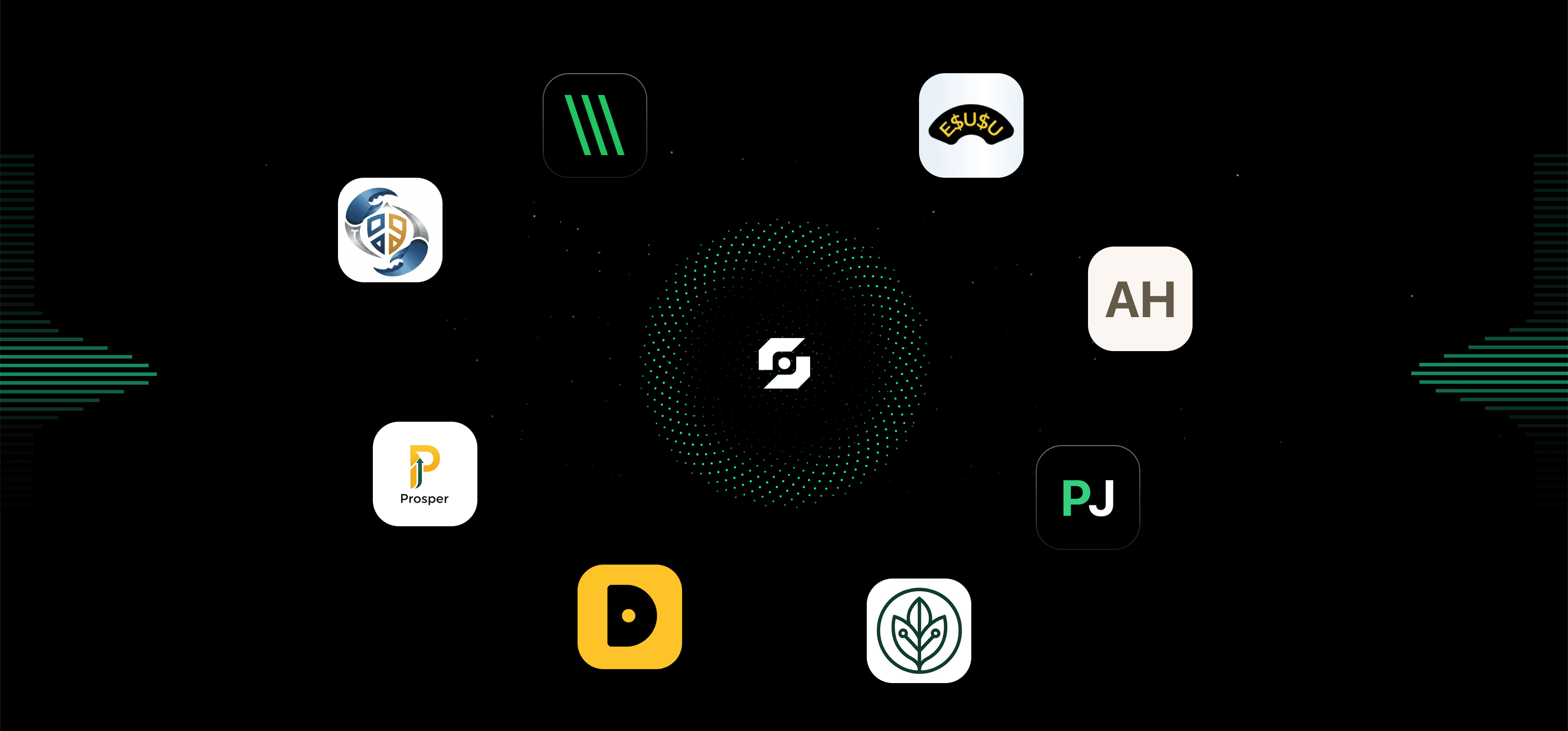
Novel applications of Self’s infrastructure for the agentic economy have emerged in recent weeks, with notable examples including:
SelfClaw: an open agent economy built on Self's ZK-powered passport verification, where verified agents receive an onchain identity, a self-custody EVM wallet, and the ability to deploy their own ERC20 token with automatically bootstrapped Uniswap liquidity. Agents earn through a skill marketplace and agent-to-agent commerce, with reputation staked onchain and scored by peers under a "Proof of Contribution" model.
MavuClaw: a human layer for agents - connecting AI agents to a global workforce of verified human workers for tasks that require human execution. Agents post micro-tasks, MavuClaw matches them to workers who have verified their humanity and any unique eligibility criteria (age, nationality, etc.), with seamless stablecoin payments built in.
AgentHaus: a platform for creating and managing AI agents with onchain wallets, Self Protocol-verified identities, and the ability to execute transactions, deploy tokens, and plug into the broader SelfClaw agent economy.
Trust Agent: a drop-in middleware library that lets AI agents authenticate each other, assess trustworthiness, and manage access controls, powered by Self Protocol's ZK identity verification and onchain reputation scoring.
Esusu: a decentralized savings app that brings the traditional African collective savings model onchain, with Self's identity verification ensuring each participant in a contribution pool is a unique, verified human, and the system is sybil-resistant by design.
PerkyJobs: a job marketplace on Celo where humans and AI agents post tasks, claim work, and get paid in USDT, using Self to verify the identity of agents’ owners and the humanity of task participants before payment.
MyDay: a behavioral savings protocol where users stake stablecoins after completing daily habits via Telegram, with each completed habit depositing into a time-locked savings vault, earning yield. Self Protocol verification ensures every streak and reputation score is tied to a real, unique human.
Prosper: a financial agent tool that facilitates cross-border payments and savings management through simple natural language commands. The agentic app routes transfers for optimized fees, moves idle stablecoins to high-yield vaults, and leverages Self for bot resistance and identity verification.
While Self's tooling helps agents inherit and prove their owners' credentials, the same infrastructure powers the opposite application: protocols that need to enforce human-only access and keep bots out. Whether a platform needs to confirm there's a real person behind an agent, or that there's no agent at all, Self's proof-of-human and ZK identity primitives are the foundation either way.
Published
Related blogs


Stay updated
Join us on the road to privacy-first identity.